
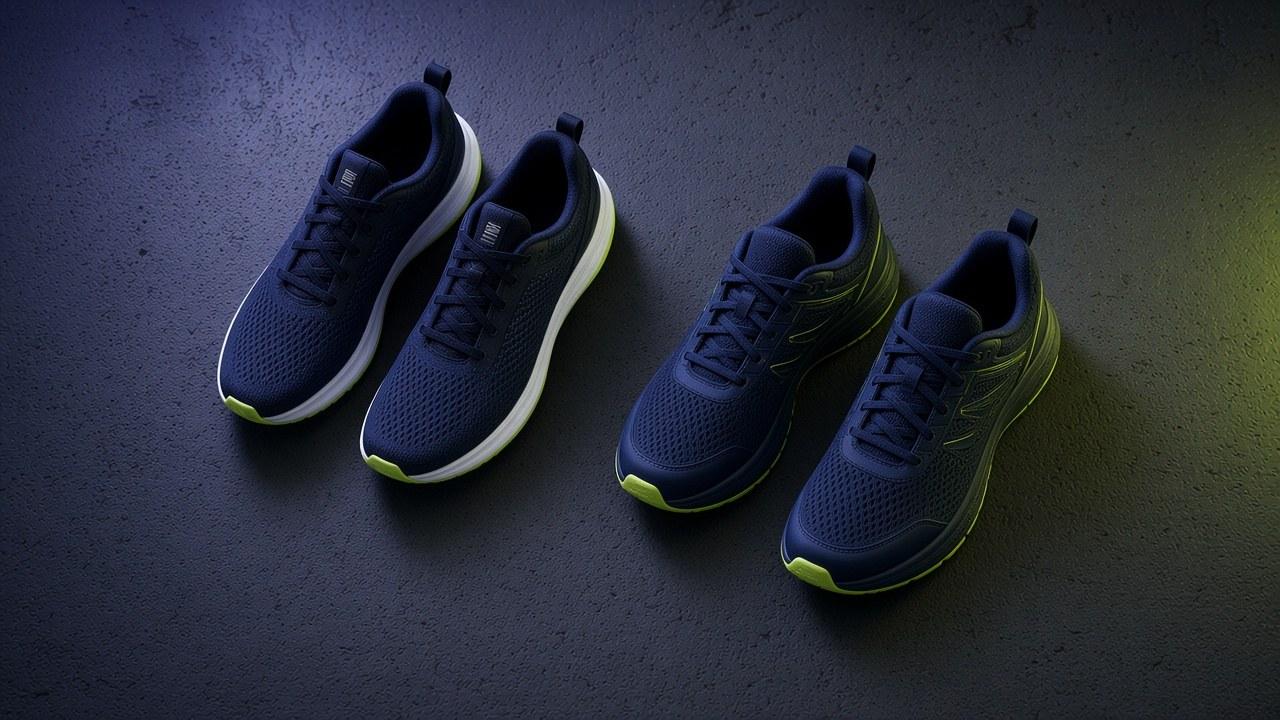
Hybrid Race Gear is independent. We are not affiliated with or endorsed by HYROX, PUMA, or Reebok.
PUMA Deviate NITRO 3 (HYROX Edition) vs Reebok Nano X5 for hybrid racing
Hybrid races ask one pair of shoes to cover about eight kilometres of running plus strength stations. A carbon-plated running trainer and a gym shoe start from opposite ends. This note compares the PUMA x HYROX Deviate NITRO 3 with the Reebok Nano X5 using published sources only. Neither shoe is a site score, and neither has been worn for this page.
We may earn a commission from links on this page. How we make money
Those buttons open the manufacturer pages. Colourways differ, so check the page you land on. This site does not link a marketplace variant.
Quick verdict
Reviewers who write about HYROX-style racing often favour a run-leaning shoe when the clock is driven by the kilometres. Gym-oriented reviews favour a lower, firmer trainer when the week is full of lunges, wall balls, and burpees. The useful question is which compromise you will notice less, not which brand wins a scoreboard we do not publish.
| Priority | Lean toward | Why, from external sources |
|---|---|---|
| Run blocks and one race-day shoe | Deviate NITRO 3 | HYROX-oriented reviews praise run cushioning plus PUMAGRIP on sled work (Women’s Running, Tom’s Guide, Rox Lyfe, Wheelhouse Academy). |
| Gym and station-heavy training | Nano X5 | Reviews emphasise heel stability, Metasplit flex for burpees and jumps, and short-run competence, not long road miles (RunRepeat, WearTesters, GearJunkie, T3). |
| Race running and station training | Often two shoes | A HYROX-focused site frames the Nano line as strong for training and weaker for race-day running. Detailed scores there centre on earlier Nano models (HyroxRunners). |
Spec snapshot
Figures below are what those sources report. They are not measurements taken for this site. Some reviews discuss the standard Deviate NITRO 3 and the HYROX-branded edition together. Treat colourways as separate even when the platform overlaps. There is no price on this page.
| Spec | Deviate NITRO 3 | Nano X5 |
|---|---|---|
| Drop | 10 mm | Often 7 mm in brand and reviews; one lab reports 8.1 mm |
| Stack | 39 / 29 mm, as reported | About 27.0 / 18.9 mm in a lab report |
| Weight | About 250 g in one Women’s Running sample. Rox Lyfe reports about 298 g for a men’s US 10 and about 240 g for a women’s 6.5. | About 340 g / 12 oz |
| Midsole | NITROFOAM, forked carbon plate | DualResponse, no plate |
| Outsole | PUMAGRIP | Metasplit |
| Manufacturer page | PUMA US | Reebok |
Deviate NITRO 3
What reviews praise. PUMAGRIP on sled push and pull. Cushioning suited to repeated run kilometres in HYROX-oriented write-ups. For some reviewers, workable stability on lunges and wall balls, and a fit that felt true to size.
What they flag. It can feel heavy or clunky at first. Rox Lyfe prefers Elite models when the only priority is pure race propulsion. The ride is firm for some people. A 10 mm drop splits opinion, and Tom’s Guide says it is not for real lifting. A narrow toe box is a problem for wider feet.
Nano X5
What reviews praise. A planted heel for lifting and single-leg work. A flexible Metasplit forefoot for burpees and jumps. More forefoot cushion than earlier Nanos. Durable Flexweave and RopePro, though GearJunkie notes light fraying from rope climbs. Short gym runs feel better than in many lifting shoes: WearTesters talks about roughly 1–3 miles, GearJunkie about a mile.
What they flag. It is not a distance runner. HyroxRunners treats Nano-type shoes as training tools, with a separate running shoe for race day; the detailed scores there are mainly earlier Nanos. It is heavier, about 340 g. RunRepeat’s wet-concrete lab traction scored low even when gym floors felt fine in field reviews. Fit reports conflict: RunRepeat calls it snug and poor for wide feet, while WearTesters, GearJunkie, and T3 describe a roomier toe box than the X4. Heel slip shows up in some write-ups.
Station by station
Published opinions only. Where a source is silent, this page does not invent a winner.
- Runs. Deviate is the stronger match in HYROX-oriented race write-ups. Nano X5 suits short gym runs and becomes limiting when the running is continuous.
- Sled push and pull. Deviate reviews highlight PUMAGRIP. Nano reviews praise planted gym-floor stability. Keep RunRepeat’s wet-lab score separate from how the shoe felt on a dry gym floor.
- Burpee broad jumps. Nano X5 has the clearer write-ups: flex and forefoot cushion. Deviate sources say little here.
- Sandbag lunges. Several Deviate race reviewers felt stable enough. It is still a higher-drop plated runner. Nano X5 fits lunges and single-leg gym work in the gym reviews.
- Wall balls. Tom’s Guide reports manageable Deviate stability in a race without calling it a lifting shoe. Nano X5 matches gym reviews of squatting under load.
- Rowing and SkiErg. Not covered in depth in this source set.
- Farmers carry. Almost no model-specific commentary in the cited reviews. A firmer, lower trainer may feel steadier under load for some people. That is a category tendency, not a tested claim about these two shoes. Prefer lockdown and grip you have already practised.
Who should choose which
- Deviate NITRO 3 if you want one race-day shoe and you mostly run, you care about the sled grip reported for this family, you accept about a 10 mm drop and a plate, and your feet are not especially wide.
- Nano X5 if your week is station- and lifting-heavy, or you already own a race runner. You want burpee, jump, and squat confidence more than road bounce, and you accept more weight and less long-run comfort.
- Both if you train stations often and also care about run splits on race day. Many people who race recreationally keep a gym shoe for station sessions and a run-leaning shoe for race day. That is a planning choice, not a rulebook requirement. Events still require closed-toe shoes. Check the current rulebook. Before race week, rehearse at least one session that mixes running with a sled or lunges in the pair you intend to race in.
What the research says
These notes summarise published biomechanics and footwear research, plus manufacturer technique guidance. They are not personal clinical opinions, race diaries, or treatment advice from Hybrid Race Gear. Evidence for many footwear features is mixed. Responses vary between runners.
Drop and a plate, versus a firmer lower shoe
Heel-to-toe drop can change loading, but a 2023 systematic review in Footwear Science found that drop alone often does not clearly change stride timing, length, or major joint kinematics. Lower drop may raise vertical loading rate in some data. A large trial of cushioned shoes found no overall injury-risk difference by drop, with effects that differed between occasional and regular runners (Malisoux et al., 2016). Carbon plates mainly raise longitudinal bending stiffness and can alter ankle and toe mechanics. Economy results are mixed (Ortega et al.). Direct trials of a plated 10 mm shoe against a roughly 7–8 mm trainer during lunges after hybrid run blocks are scarce. Comfort and control in a mixed session tell you more than the drop number alone.
One shoe or two
Observational work has associated using more than one pair of running shoes in parallel with a lower rate of running-related injury over follow-up (Malisoux et al., 2015). That is not proof that two shoes prevent injury, and it was not a hybrid-race trial. A practical split that HYROX-oriented shoe writing often reflects is a run-leaning shoe when the kilometres dominate race day, and a firmer trainer for station-heavy gym weeks. Rehearse the race pair in at least one mixed session before race week.
Wide forefoot and heel slip
Fit is individual. Specialty retailers describe a heel-lock lace to reduce heel slip when the shoe is otherwise close, and skipping or straight-lacing the lower eyelets to free a tight forefoot (Road Runner Sports, Runner’s World, Running Warehouse). Those guides also say lacing only buys millimetres. Persistent crowding usually means a wider last. A heel that only stays put with extreme tension may be the wrong model. Conflicting Nano X5 width reports are a reason to try the shoe on, not to treat one lab mould as universal.
Stack, grip, and the sled
Stack height and outsole grip are different features. In treadmill research, very high stacks have been linked to style changes and some stability-related measures (Kettner et al., 2025). World Athletics caps road-shoe sole thickness in elite competition. That is context only. It is not a HYROX rule. Sled traction depends more on rubber and surface than on stack millimetres. A grippy outsole can still sit under a tall midsole. There are few peer-reviewed sled-push shoe trials. Use how the shoe feels in mixed training as your check.
Heel pressure on the rower and SkiErg
Concept2’s RowErg foot-position note recommends a thin, flat shoe, or socks, when possible. A thick or high-heeled running shoe changes the foot angle on the Flexfoot and may feel less strong on the drive. Some rowers then move the Flexfoot one hole lower. Aim for the strap across the ball of the foot. On the SkiErg, Concept2 advises weight mainly on the balls of the feet (stance, technique). If a cushioned race shoe bothers your heels in the cups, try the Flexfoot first. A flatter trainer may simply feel clearer on the machines.
Not medical advice. This section does not diagnose or treat injuries. If pain persists, see a physiotherapist or other qualified clinician. Do not try to fix it with shoes alone.
Questions
Does “HYROX” in the PUMA name mean official approval?
No. It is brand marketing. Hybrid Race Gear is independent. Choose footwear that fits and meets your event’s closed-toe rule.
Can I finish a race in the Nano X5?
Gym reviews support mixed training. Running-focused commentary treats Nano-type shoes as stronger for training than for maximising run splits. If finishing is the goal and the shoe already feels familiar, that can be a reasonable personal choice. It is not a rulebook ban, and it is not the same as saying the shoe maximises run economy.
Is this the Deviate NITRO Elite?
No. Reviews distinguish Deviate NITRO 3 from Elite race models.
Do you publish star ratings?
No. We summarise other publications and link them. We have not scored these shoes.
Sources
- Women’s Running — Deviate NITRO 3 HYROX (10 Jan 2025)
- Rox Lyfe — Deviate Nitro 3
- Tom’s Guide — Deviate Nitro 3 (7 Jul 2025)
- Wheelhouse Academy — HYROX shoe review (9 Sep 2025)
- PUMA US — PUMA x HYROX Deviate NITRO 3
- RunRepeat — Nano X5 (6 Jan 2026)
- WearTesters — Nano X5 (4 Feb 2025)
- GearJunkie — Nano X5 (28 Apr 2025)
- T3 — Nano X5 (31 Jan 2025)
- HyroxRunners — Nano for HYROX (updated 26 Aug 2026)
- Reebok — Nano X5
- Footwear Science review on heel-to-toe drop (2023)
- Malisoux et al., 2016 — drop and injury risk
- Ortega et al. — carbon plates
- Malisoux et al., 2015 — more than one pair of shoes
- Kettner et al., 2025 — stack height
- World Athletics shoe regulations (elite road context)
- Concept2 — RowErg foot position
- Concept2 — SkiErg stance
How we make money
The PUMA and Reebok links on this page can be affiliate links. If you buy through them, we may earn a commission at no extra cost to you. We do not sell the shoes and we do not hold stock.
Hybrid Race Gear is independent. We are not affiliated with, endorsed by, or sponsored by HYROX, PUMA, Reebok, or any other brand. A product name that includes “HYROX” is a marketed edition or the event format. It is not approval of this site.
This comparison is independent. We have not lab-tested or race-tested these shoes for the site. Specs and trade-offs come from manufacturer pages and the third-party sources linked above, not from our own wear trials, scores, or rankings.